
DAY 1 | 16 SEPTEMBER 2026
8:00 AM
Registration
9:00 AM
Welcome remarks

Aditi Sharma Kalra
Editor-in-chief
9:10 AM
Opening address

Umairah Nasir
Journalist
Human Resources Online
Powering the business
9:20 AM
[Opening keynote]
Development that matters: Designing work that helps people grow
AI is reshaping how quickly people can access knowledge and redefining the purpose of workplace learning. As work changes, L&D must design development with greater intention and measure learning through the growth it creates.
This session explores how organisations can build organisational learning that responds to business needs, reflects employee realities, and strengthens the human capability required for an AI-enabled future.
Get set to discuss:
- Designing meaningful work experiences and developmental relationships that build capability, confidence, and adaptability.
- Using evidence and data to understand where employees need development and which interventions create value.
- Rethinking learning measurement around application, capability, and business outcomes.

Seet Teng Low
Head of Campus CoLab, Group Human Resources
OCBC
10:00 AM
[Presentation]
Data storytelling: Make your insights impossible to ignore
Great analysis means nothing if nobody acts on it. Learn how to turn data into a clear, compelling story that drives decisions.
- Craft a key takeaway that resonates with your specific audience
- Choose the right visualisation and strip away the clutter
- Create better presentations faster with AI

Dominic Bohan
Co-founder
10:40 AM
Networking break
11:10 AM
[Presentation]
What we got wrong building AI for people: Making AI trustworthy enough to make talent decisions with
Most AI in talent doesn’t fail because it isn’t smart enough. It fails because the person being measured doesn’t trust it enough to be honest with it, or the organisation measuring doesn’t trust it enough to decide on it. Both sides have to be earned and most enterprise evaluation processes only test for one.
Drawn from five years and tens of thousands of AI-led conversations across global enterprises, this session is an unusually candid account of what breaks when AI moves from an impressive demo into a system that hiring and development decisions actually depend on. It covers the failures that don’t show up in a pilot, the governance questions almost nobody asks a vendor until something has already gone wrong, and the design decisions that determine whether people engage honestly or simply perform for the system. A live demonstration follows, showing what these principles look like in practice across hiring, development, and leadership workflows, including responsible AI, privacy, and data-handling practices, and where human judgment stays firmly in the loop.
Attendees will leave with:
- A two-sided trust framework for evaluating any AI talent system, what makes a person honest with it, and what makes an organisation able to decide on it, and why passing a security review answers only half the question.
- An understanding of why AI scores drift over time as models, prompts and scoring logic change beneath a programme, and what has to be in place for a score in January to still mean the same thing in December when promotion and succession decisions are made.
- Ten questions to put to any AI vendor, including us, the ones that separate a demo from a system, and that most vendors have never been asked

Kumar Veetrag
Co-founder and CTO
11:50 AM
[Presentation]
The ROI of LOL: Using humour to make learning stick
In a workplace crowded with competing priorities, engagement has become L&D’s new battleground. To encourage learning, the experience must feel relevant, human, memorable, and worth the learners’ attention.
This session explores how humour can be used to build trust, lower resistance, improve recall, and help people connect with difficult ideas. Used with purpose, humour can encourage participation, and support behaviour change at work.
Get set to discuss:
- Using humour to earn attention and make learning more engaging, memorable, and “human”.
- Building trust and psychological safety so employees feel more open to reflection, feedback, and change.
- Developing human skills such as storytelling, presence, communication, and the ability to carry people along.
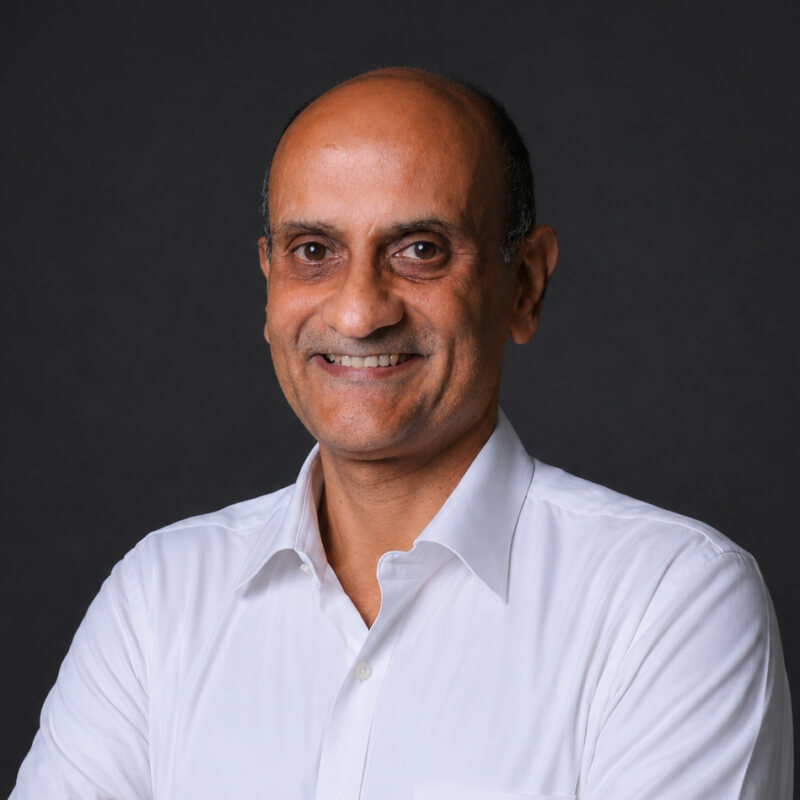
Paddy Rangappa
Co-Founder
12:10PM
[Panel discussion]
Future-ready by design: Building learning strategies for the AI-driven workforce
As Singapore accelerates AI adoption, learning must go beyond skills development to build workforce readiness and business performance. Beyond the formation of the National AI Council, organisational adoption will require an intentional approach to help employees thrive in an AI-driven workplace.
This keynote explores how organisations can design learning strategies that help employees keep pace with evolving business needs and turn AI ambition into real impact.
In this session, delegates will learn:
- Preparing the workforce for AI-driven change: How learning strategies can help employees build the skills and confidence needed for a changing world of work.
- Balancing execution and trust: Strategies to keep a human in the loop for critical tasks requiring strategic judgement and intervention.
- Redefining learning, performance and accountability: Creating a safe practice environment, parameters and boundaries.
Moderator:

Kevin Chua
Chief Human Resources Officer

Jessica Choo
Founder & Chief Strategist

Esther Liang
Principal, Global Front-End Organisation Development
Micron

Sean Lim
Chief Human Resource Officer
NTUC LearningHub
12:50 PM
Lunch break
1:50 PM
Accelerating capabilities
1:50 PM
[Experiential learning]
Performance made human: Designing learning that accelerates business capability
Information can explain what people need to do, but it does not always change what they do under pressure. Learning creates real business value when it is grounded in the psychology of learning, helping people shift mindsets, practise new behaviours, and make learning stick.
This experiential learning session uncovers the secrets to the habits, priorities, and team dynamics that shape performance. Participants will practise communicating clearly, prioritising messages, and making decisions in a time-sensitive setting.
Get set to explore:
- The psychology of learning and why knowledge alone rarely leads to mindset change or lasting behaviour change.
- How experiential learning helps people practise communication, prioritisation, judgement, and collaboration when pressure is high.
- Ways to design learning that makes new behaviours stick through reflection, feedback, and practical application at work.

Andrew Thomas
CEO
Eagles Flight Asia Pacific
2:50 PM
Networking break
3:20 PM
[Spotlight]
Building trust through change: What employees need from leaders
Trust influences whether employees contribute ideas, take ownership, share concerns, and engage with new ways of working. As AI reshapes roles, decisions, and career paths, building trust is critical to helping leaders provide clear direction, communicate openly, and create space for questions as work evolves.
Drawing on organisational trust research, this session offers practical insight into how leaders can build confidence, sustain connection, and guide their teams through change.
This session covers:
· The foundations of trust at work, including competence, integrity, consistency, openness, and care.
· How to communicate change clearly and credibly when plans, priorities, and answers are still emerging.
· Creating psychologically safe teams where employees can raise concerns, challenge assumptions, learn from mistakes, and adapt with confidence.

Dr Hwee Hoon Tan
Associate Professor of Organisational Behaviour & Human Resources, Lee Kong Chian School of Business
Singapore Management University
3:40 PM
[Lightning talks]
Relevance redefined: How the L&D function can stay central to business success
With content becoming so easily accessible, questions have been raised around the relevance of the L&D function, and if it is evolving faster than the workforce it supports.
In this session, we put out a message to all L&D teams to continuously upskill themselves to remain credible, strategic partners and true ambassadors of next-generation learning.
On this session, we will come up with ideas on:
- Importance of anticipating future talent shifts, such as reduced entry-level opportunities, and proactively designing interventions.
- How L&D professionals can stay anchored to critical business priorities that directly impact performance.
- Real-life experience sharing for L&D leaders to broaden their perspectives, and position themselves as forward-thinking business partners.
Panellists:

Elaine George
Executive Director, Learning & Talent Advisory Lead, APAC Tech & Ops
JPMorgan Chase & Co.

Chow Yong Ng
AGM, Learning & Talent Development
M1
4:10 PM
[Closing keynote]
Learning by doing, capability by design: Building workforce capability through real work
Knowledge is becoming easier to access, but business capability is built when employees can apply what they learn in real work. This session explores how L&D can accelerate capability by designing learning around business outcomes, hands-on experience, and measurable performance improvement.
Drawing from her experience leading people strategy, our speaker will share how structured on-the-job learning can help employees build critical skills while delivering meaningful business outcomes.
Key discussion points include:
- Starting with business outcomes: Defining the capabilities the business needs, not just the courses employees should attend.
- Embedding learning into work: Using real projects, hands-on experience, deliberate practice, and reinforcement to build capability faster.
- Measuring business impact: Connecting learning metrics to operational metrics so development strengthens individual performance and organisational success.

Julia Koh
Chief Human Resources Officer
Sunningdale Tech
4:40 PM
Closing remarks
4:40 PM