
Agenda
28 May 2026
Registration and networking
Elevating business outcomes
Welcome remarks

Aditi Sharma Kalra
Editor-in-Chief
9:20am
[Opening presentation]
Agile by design: Strengthening business performance across borders
For MNCs in Thailand looking to scale globally, agility is not just about workforce flexibility, but about executing consistently across regions while adapting to local realities.
This session examines strategies to strengthen performance by aligning pan-Asia business and talent objectives with local execution. This takes into consideration of the management of cross-border teams and the need for shifting mindsets. With the added complexity with technology, compliance and operational constraints, HR leaders must step up to align local realities with business objectives.
Key discussion areas from the speaker will include:
- Translating global strategy into local execution to adapt to local markets, regulatory, and cultural contexts.
- Practical challenges of decision-making, accountability, and speed when teams span geographies and time zones, and how to overcome them.
- How clarity of roles, systems, and leadership behaviours enable teams to adapt and perform with better results and competitiveness.
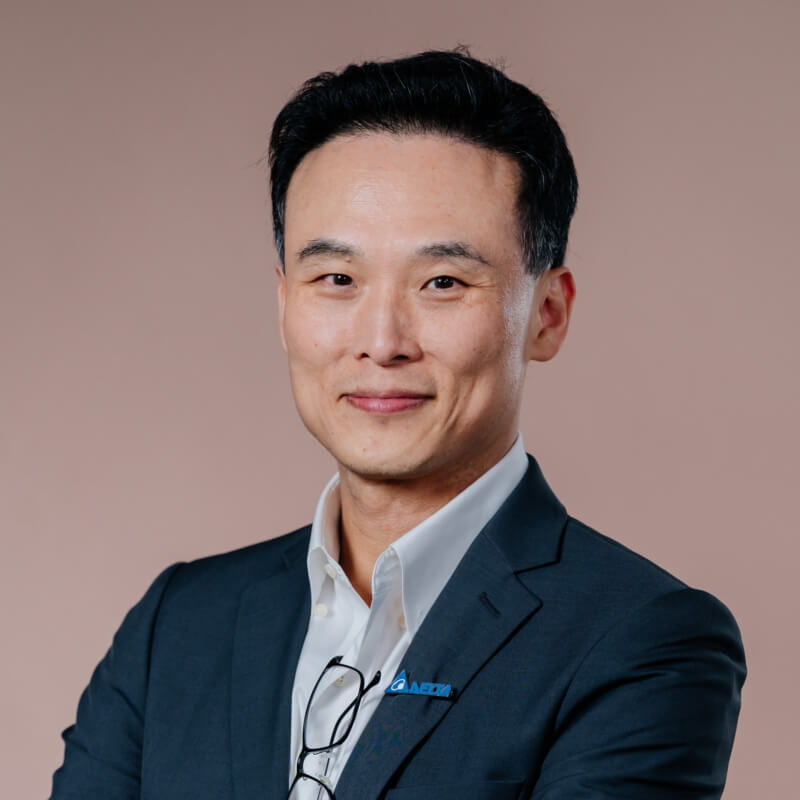
Chih-Hao Huang
Chief Human Resources Officer, SEA Region
Delta Electronics (Thailand) PCL
10:00am
[Presentation]
Addressing the cost of miscommunication: Unlocking the value of a multilingual workforce
This session explores how inclusive and advanced communication strategies can help strengthen language capability, particularly in fast-changing, global workplaces.
Key takeaways from this session will include:
- Practical steps HR leaders can take to close the communication skills gap across all levels of the organisation.
- Using advanced solutions to enable personalised, scalable language development that delivers measurable results.
- Real-life case examples on navigating today’s AI-driven workplace through stronger leadership communication and language capabilities.

Will Polese
VP of Revenue
ELSA Corp.
10:40am
Networking break
Enhancing digital capabilities
11:10am
[Training ground]
Critical roles, critical skills: Closing the leadership capability gap in Thailand and the Mekong region
The pressure to cultivate leaders who can unite teams, shift mindsets, and drive value creation has intensified. Today’s leadership pipeline demands far more than traditional managerial ability – the future organisation needs leaders who can combine functional expertise, enterprise-wide understanding, and the agility to evolve with business expectations.
This session explores how we can identify critical roles, bridge capability gaps, and build a future-ready talent bench in an era of continuous change.
Look forward to a conversation around the following talkpoints:
- Evolving the leadership profile: Why tomorrow’s leaders must be both deep functional experts and broad enterprise thinkers.
- Identifying & prioritising critical roles: How organisations can address widening gaps between business expectations and current talent readiness.
- Building a sustainable pipeline: Practical strategies to strengthen leadership readiness and close critical capability gaps.

Akarin Phureesitr
Chief People Officer
11:30am
[Presentation]
The intelligence advantage: Scaling AI for the modern workforce
In an era defined by economic volatility and a widening skills gap, intuition-based decision-making is no longer enough. To thrive, organisations must move beyond disconnected legacy systems and embrace a unified, real-time “source of truth” for their people and operations.
This session dives into how a single, AI-powered platform can integrate HR, skills, and organisational data to provide the visibility required for true agility. Discover how human-centred AI, built directly into the workflow, enables leaders to act with confidence on talent, productivity, and growth.
Key takeaways:
- Actionable strategy: Linking HCM processes to workforce data for a data-driven business strategy.
- Enterprise visibility: Optimising talent investment and mitigating risk through real-time, AI-driven insights.
- Human-ventred AI: Leveraging personalised employee experiences to accelerate organisational performance.
Speaker:

Ruth Protpakorn
Country Manager
Workday (Thailand)
12:10pm
[Lightning talks]
From anxiety to agility: Accelerating workforce readiness by reducing the AI adoption gap
The rapid rise of AI is clashing with a workforce that is not adapting at the pace that the business requires. While AI promises greater productivity, it is also creating uncertainty, especially for employees unsure of how tech will reshape their roles.
In this session, allow our expert speakers to talk about how HR can break through adoption barriers, shift mindsets, and turn AI from a source of anxiety into a catalyst for growth.
Topics of discussion will include:
- Understanding the adoption gap: Why AI readiness varies across segments of the workforce, and how organisations can read these signals.
- Shaping mindsets for change: Practical ways to reduce AI anxiety, build familiarity, and turn learning patterns into sustainable practices.
- Targeted strategies for faster AI integration: Ways to design upskilling initiatives that accelerate enterprise-wide digital confidence.
Speakers:
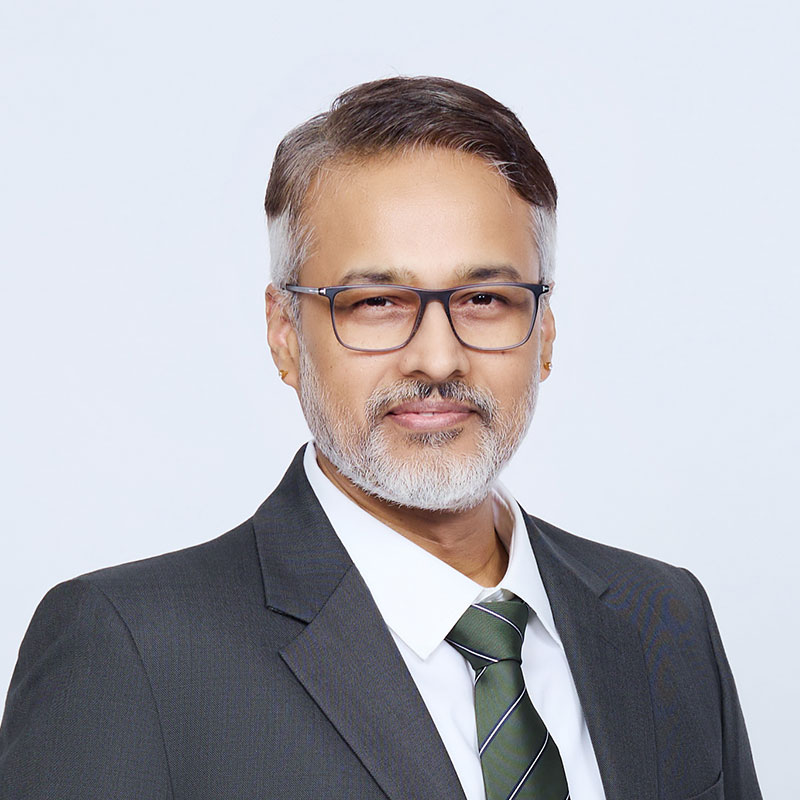
Sundaram Iyer
Head of Banpu Academy

Vibhore Kumar
Director, Human Resources
12:35pm
Networking lunch
1:35pm
[Presentation]
How do you make transformation stick? Effective change management to enable true AI success
If you are investing in AI and transformation but struggling to see consistent results, you are not alone.
AI programmes often fall short not because of the technology, but because people are not guided and supported through the change. Without a structured change management approach, employees are unclear on why AI is being introduced, how it affects their roles, and what is expected of them. The result is slow adoption, higher risk and limited value.
During this session, we will discuss:
- Identifying change-critical roles: Using tools such as readiness assessments to pinpoint which roles and individuals are most critical to the success of AI enabled transformation.
- Designing structured adoption approaches: Aligning leaders for visible sponsorship, empowering managers, and applying practical change management interventions to champion adoption.
- Building enterprise change capability: Ways to embed consistent methods, governance and measures to engage workforce and deliver sustainable outcomes across the organisation.
2:15pm
[Panel discussion]
Pushing for productivity: Revitalising manpower planning to maximise business outcomes
Cost management and productivity have become the defining talent challenges for both large organisations and SMEs in Thailand. As headcount growth slows, or even reverses, traditional workforce planning models, that used to link revenue directly to employee numbers, are proving increasingly ineffective.
HR leaders must come together to analyse ways to rethink manpower planning through a sharper focus on productivity, technology enablement, and alignment with the organisation’s P&L realities. Let’s ponder over:
- Why old workforce planning models are breaking down: Headcount-to-revenue ratios are failing in today’s cost-constrained environment.
- Is productivity the new currency? What automation and AI mean for redefining roles, workloads, and performance expectations.
- HR as a cost management partner, not driver: Practical ways for human capital leaders to connect manpower planning with financial outcomes.

Helen Snowball
Chief Human Resources Officer

Ploytabtim Yeetho
Country HR Lead, Thailand, Myanmar and Cambodia
Bayer

Suwitha (Mimi) Takerngkiat
HR leader
2:55pm
Networking break
Enabling workforce sustainability
3:25pm
[Spotlight]
Business case: Why compassion is a leadership advantage, not a liability
In a business world obsessed with performance metrics, one organisation is taking a markedly different stance: leadership grounded in compassion. With the measure of success being societal impact, this philosophy, spearheaded from the very top, challenges conventional win-win thinking by asking leaders to be role model beyond the organisation.
In this mini keynote, leave inspired with insights on:
- Reframing compassion as a leadership capability, rather than a trait that conflicts with performance.
- How leaders can role-model compassion through everyday actions, people decisions, and business trade-offs.
- Practical lessons on compassion-led leadership, proving that doing what is right can also be good for business.

Kriangkrai Yooyeun
Executive Vice President & People Director
[Spotlight]
Who do you really need to keep? How organisations are retaining their smartest talent
If you’re going out of your way to retain your best staff, you’re not alone. Think about your employees who are digitally savvy, growth-oriented, and critical to future capability building. Losing this quality talent is often termed as a ‘regrettable loss’ and creates disproportionate business risk owing to their critical role.
Progressive people leaders are adopting tiered retention strategies, comprising purposeful development, and differentiated rewards to protect their most business-critical talent – and that’s what we will dive into for this session.
Get set to discuss:
- Identifying business-critical talent: Utilising tools such as talent segmentation and skills gap analysis to pinpoint which roles and individuals matter most.
- Designing targeted strategies: Purposeful training and differentiated rewards as potential tools for retaining high-impact talent.
- Balancing fairness with focus: How to communicate and implement tiered retention strategies without eroding perceptions of workforce equity.
[Lightning talks]
Can we trust the machines? Establishing ethical AI use and governance policies
Organisations are facing an interesting challenge: not whether employees can use AI, but whether they should. In highly-regulated sectors, for example, unchecked AI use can introduce significant ethical, legal, and reputational risks, and land companies in statutory trouble. In others, challenges such as AI hallucinations and non-explainable decision-making loom large.
It’s time to explore how CHROs potentially work with their CIOs to establish clear governance to help employees use AI responsibly and confidently.
The session will cover:
- Defining boundaries for AI use: Where AI adds value, where it poses risks, and where human judgment can override machine output.
- Building AI literacy: Feasible interventions to create awareness around issues like hallucinations, bias, and over-reliance.
- Designing governance that guides: The potential in CHRO and CIO working together on policies, workflows, accountability frameworks for AI usage.

Sidchana (Cherry) Mahasupachai
Regional HR Director

Aleksander Højgaard
Director of Talent Acquisition
4:25pm